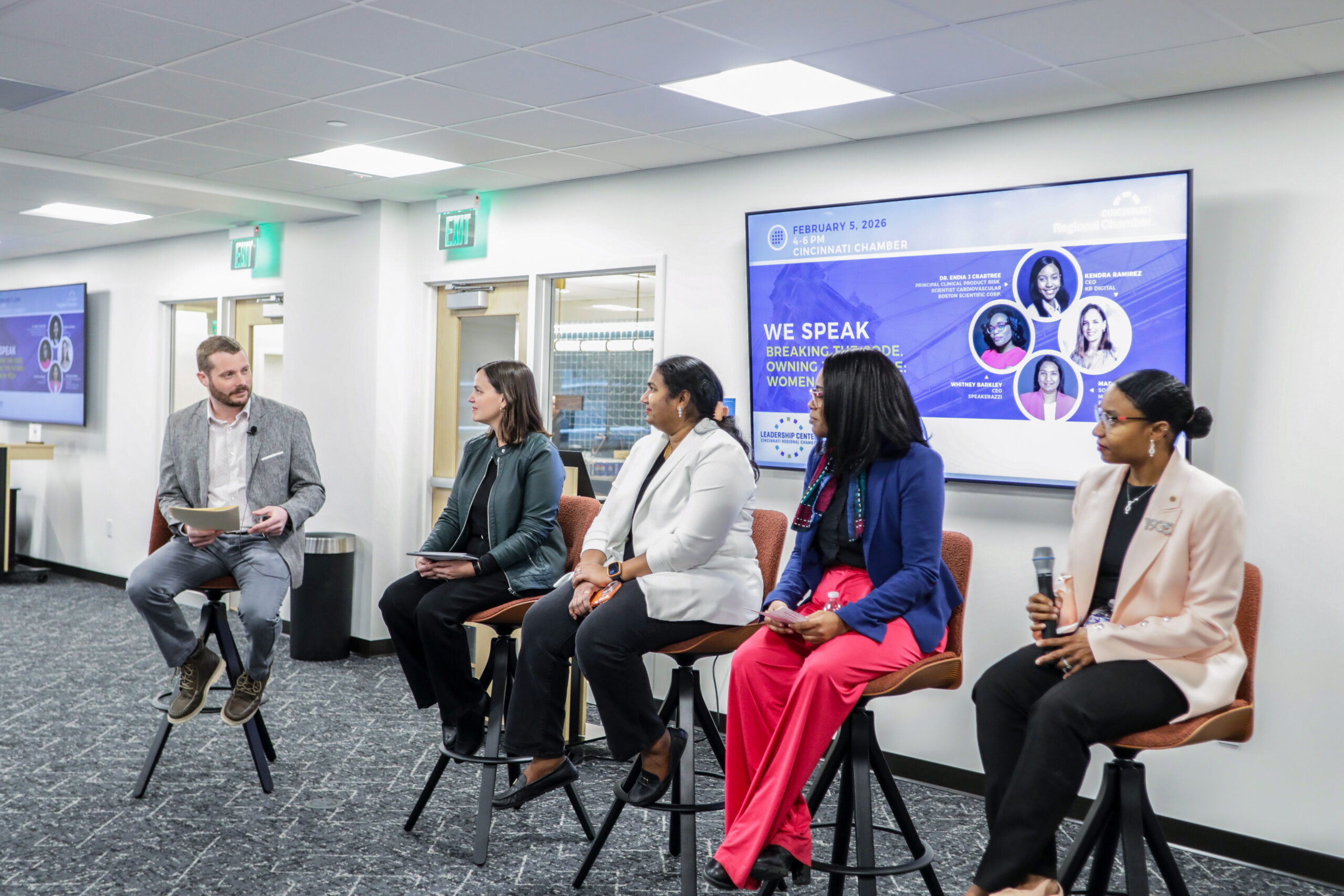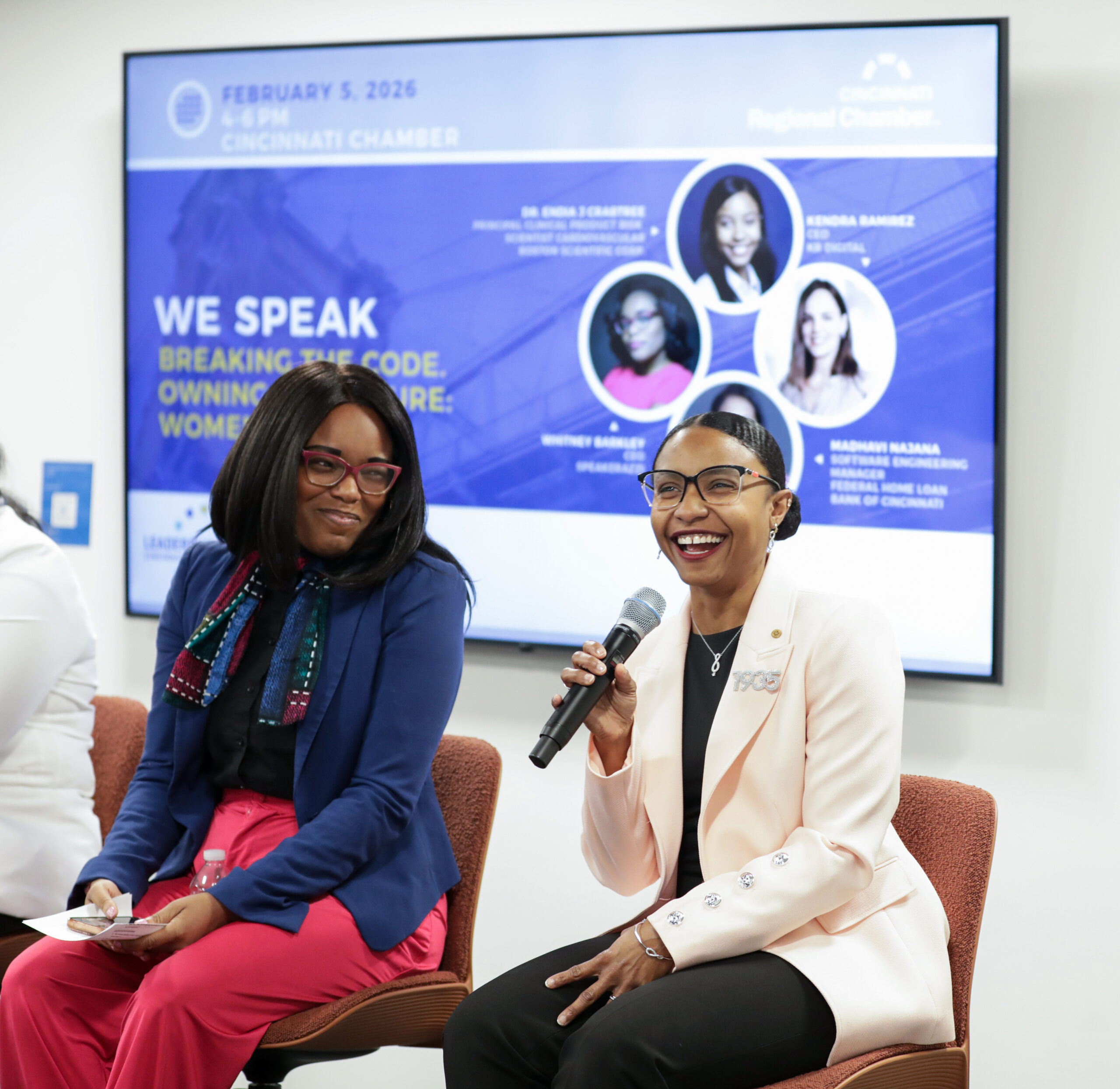

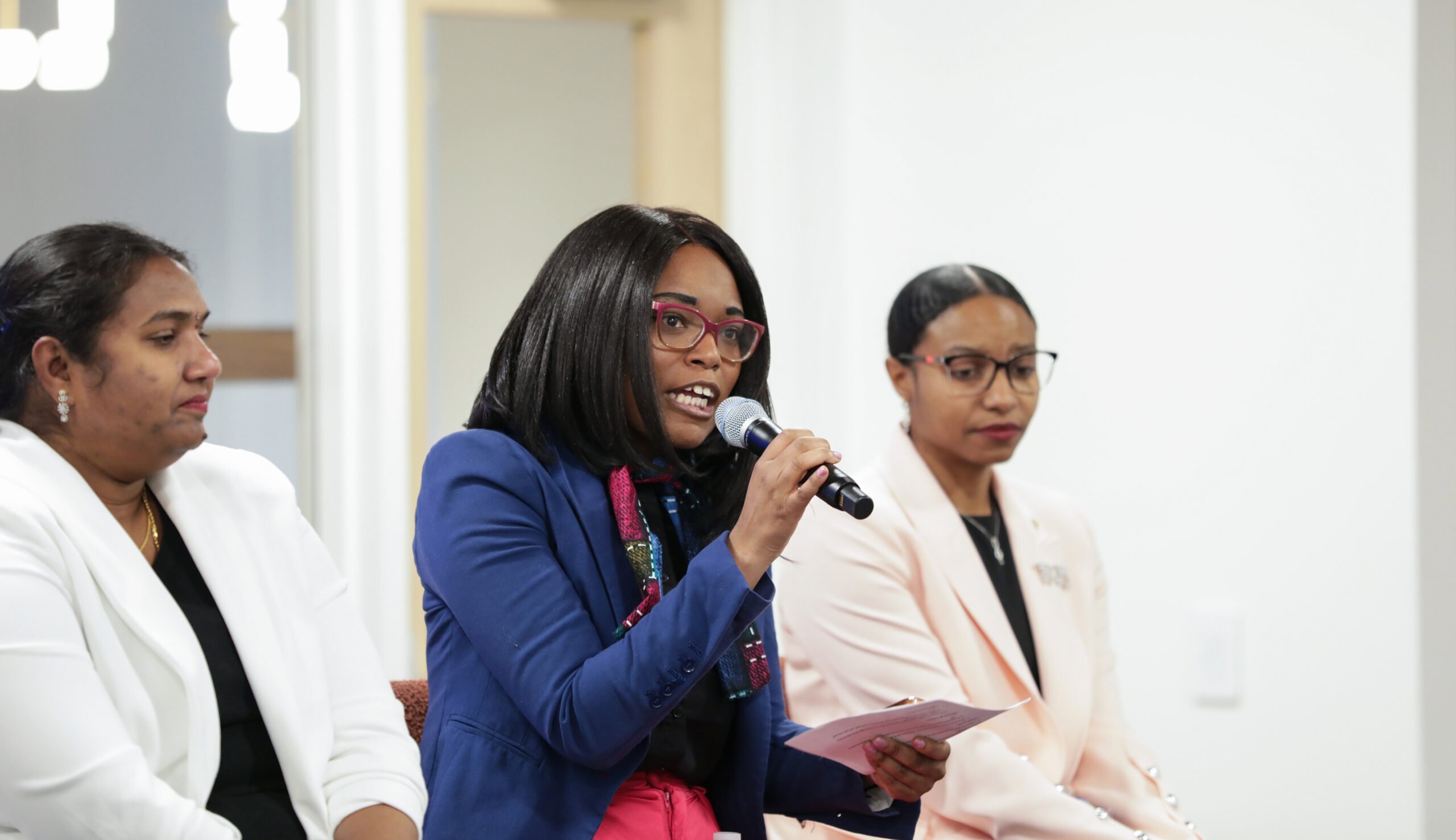
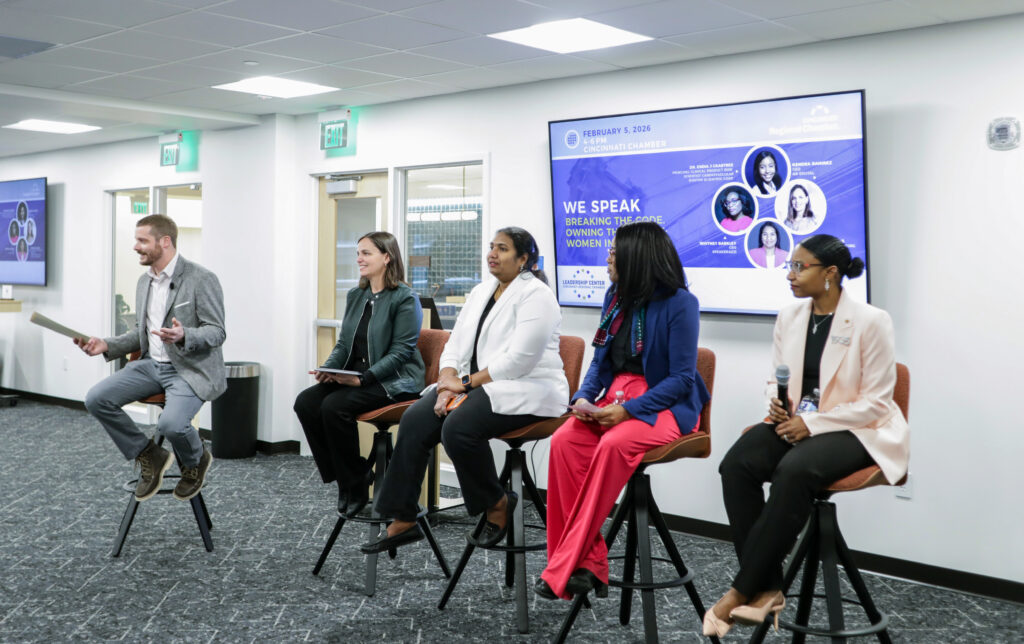
Dr. Crabtree offered a powerful perspective from the intersection of clinical rigor and cutting-edge technology. Working in medical device safety and global AI product delivery, she underscored that AI is not simply a productivity tool — it is a steward of trust. In highly regulated industries, emerging technologies must be deployed with governance, precision, and accountability.
Her message reframed AI from a “magic bullet” into something far more nuanced: a force multiplier when implemented thoughtfully. By pairing innovation with integrity, organizations can enhance research capabilities, improve patient outcomes, and safeguard product quality — all while maintaining the trust that underpins healthcare and global markets.
Demystifying AI for Everyday Use
Kendra Ramirez brought accessibility to a topic that often feels overwhelming. Drawing from her work in digital transformation and AI education, she focused on mindset first. For many professionals, the barrier to entry is not the technology itself but uncertainty about where to begin.
Ramirez emphasized that AI adoption doesn’t require a complete overhaul. Instead, it can start with practical tools that simplify workflows, streamline communication, and reclaim time in increasingly busy lives. Her perspective resonated across career stages — from those experimenting for the first time to seasoned leaders seeking scalable solutions. The takeaway was clear: progress begins with curiosity and small, intentional steps.
Human-Centered Technology
Whitney Barkley shifted the conversation toward visibility and voice. With more than a decade of experience in personal branding and content strategy, she explored how emerging AI tools can amplify — not replace — human narratives.
In a digital economy, clarity of purpose remains the differentiator. AI can accelerate content creation and extend reach, but without authenticity and strategy, it falls flat. Barkley encouraged attendees to see technology as an amplifier of what already makes them distinctive. When guided by intention, AI becomes a powerful ally in professional storytelling and brand development.
Inside the Engine Room of Innovation
Offering a behind-the-scenes view of tech leadership, Madhavi Najana shared what responsible AI integration looks like within established institutions. As a software engineering manager, she highlighted the collaborative, cross-disciplinary thinking required to deploy AI solutions safely and effectively.
Her insights illuminated the balancing act many organizations face: driving innovation while maintaining stability, security, and compliance. The future of technology, she noted, will belong to those who can translate technical capability into organizational impact — bridging engineers, executives, compliance teams, and end users in the process.
A Conversation, Not a Lecture
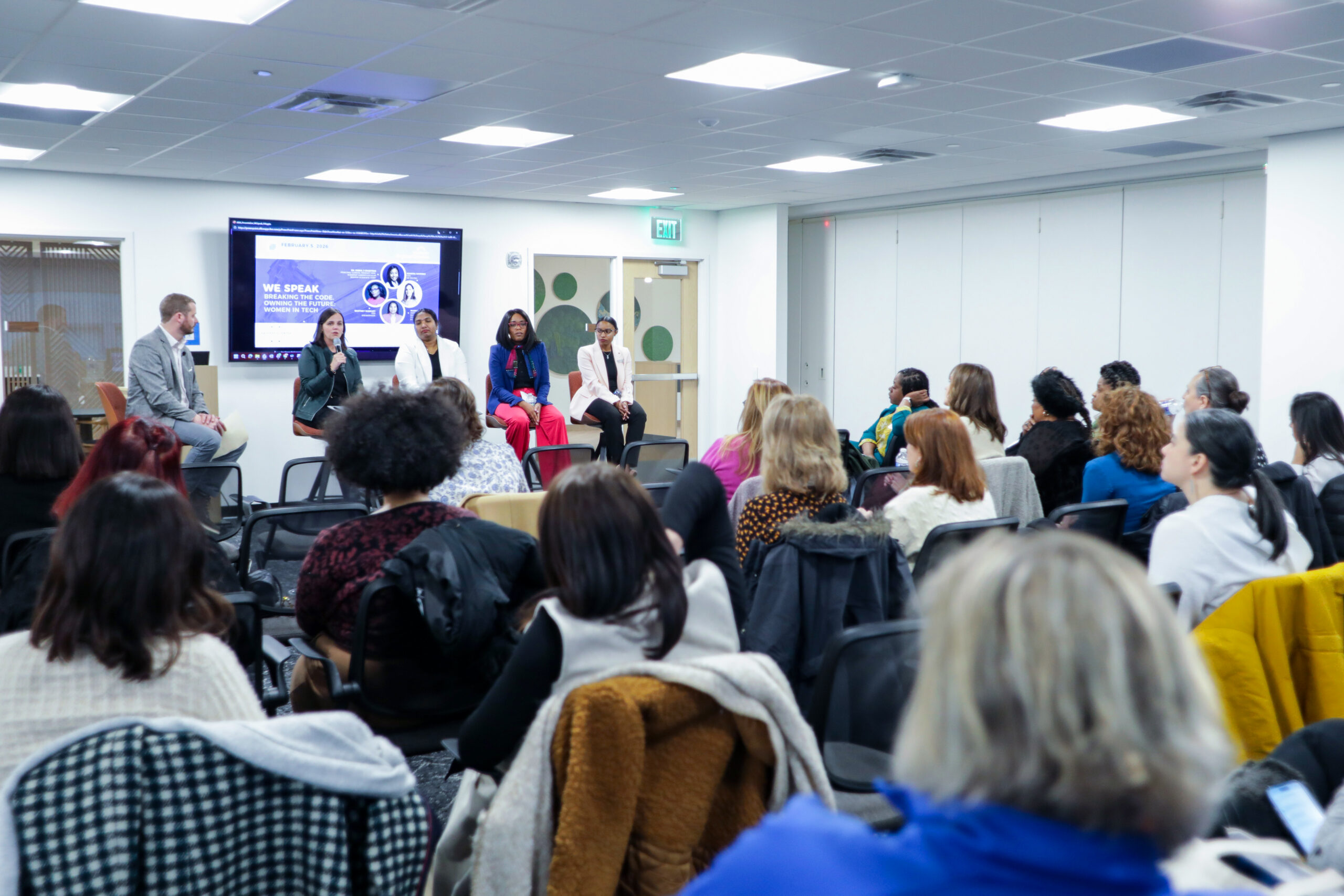
What distinguished Breaking the Code was its energy. Audience members — many experts in their own right — contributed questions, challenges, and lived experiences that transformed the session into a dynamic roundtable. The exchange reinforced an essential truth: technology is not owned by one industry or skill set. It is shaped collectively.
Taken together, the discussion made one point abundantly clear: there is no single “AI solution.” Different challenges demand different tools. For some organizations, the right answer may be building proprietary systems tailored to their needs. For individuals, it may be a blend of experimentation and partnership — learning enough to ask smart questions and knowing when to bring in an expert.
Above all, WE Speak’s latest event underscored that understanding technology today requires fluency on multiple levels — strategic, technical, ethical, and human. Owning the future isn’t about mastering every tool. It’s about cultivating the confidence and curiosity to engage with them thoughtfully.
What’s Next
Don’t miss what’s next—join us May 7 for WE Speak: Building Without Limits: Women Shaping the Future of Construction. Registration opens soon, but you can learn more my visiting the WE Speak page at the Cincinnati Regional Chamber.