



As Greater Cincinnati enters a milestone year, major investments in transit, technology, and talent are aligning to support the region’s continued economic growth—and Metro is at the center of that momentum.
During a recent Cincinnati USA Regional Chamber briefing, regional leaders outlined how public transit improvements, business innovation, and workforce development are shaping Cincinnati’s future in 2026 and beyond.
Chamber President & CEO Brendan Cull described 2026 as a pivotal year for the region, marked by significant anniversaries and the return of major cultural events that reinforce Cincinnati’s national profile.
“This is going to be a very big year in our community and our region, with much growth and opportunity ahead,” Cull said.
Reinventing Transit to Power Regional Growth
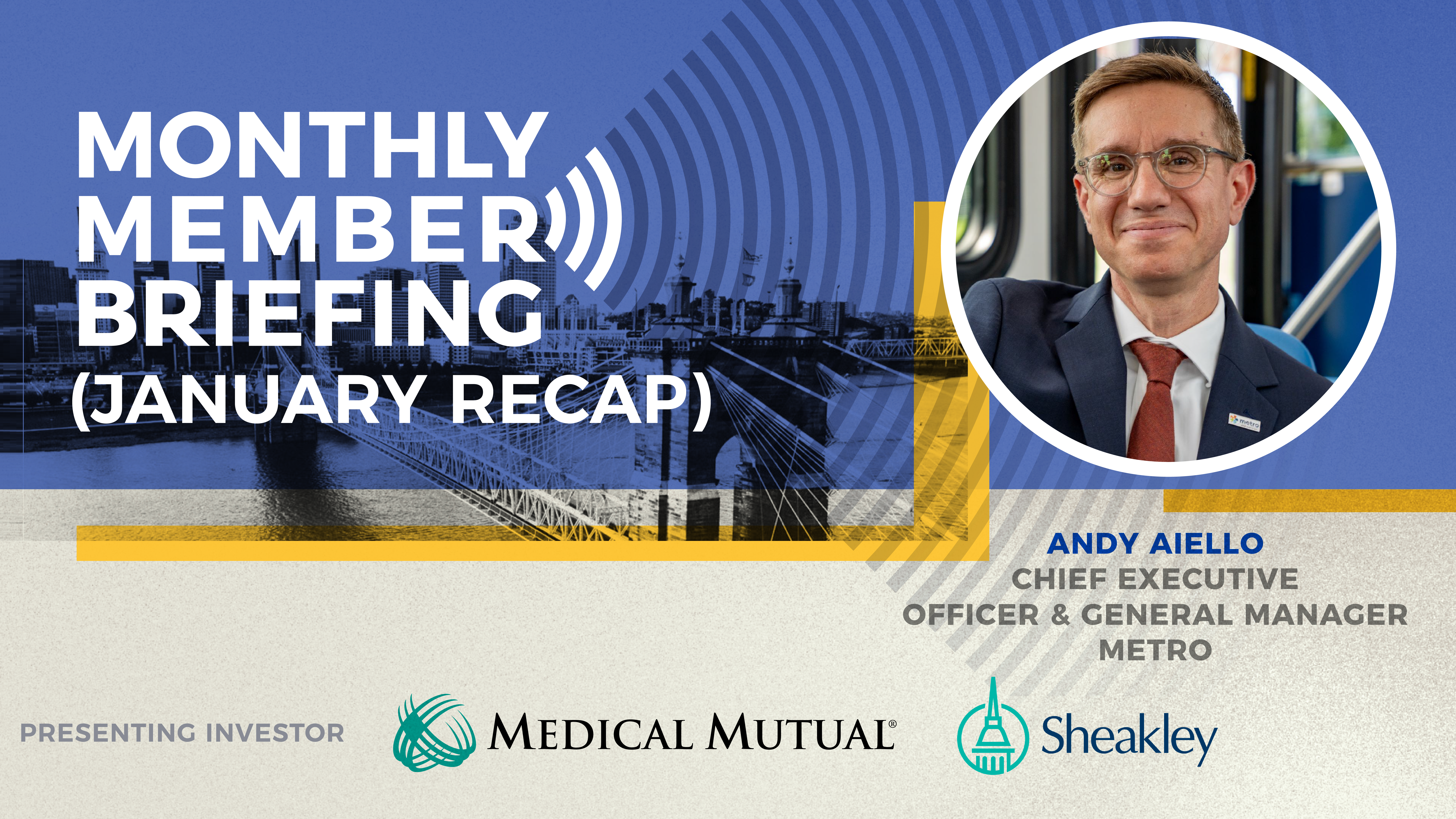
Metro CEO and General Manager Andy Aiello highlighted how voter-backed investments are transforming transit service across Hamilton County and positioning the region for long-term growth. In 2020, voters approved a dedicated sales tax to improve public transportation—an investment Aiello said is already delivering results.
Since 2019, Metro has introduced 24-hour bus service for the first time in county history, added eight crosstown routes that shorten travel times, expanded weekend service, and launched MetroNow, an on-demand transit option designed to improve first- and last-mile access.
Those changes are translating into stronger ridership. While many peer cities are still recovering from pandemic-era declines, Cincinnati’s transit system is operating at approximately 110% of pre-pandemic ridership.
“We are one of the few transit systems in the country that actually has more riders now than before the pandemic,” Aiello said.
Bus Rapid Transit and Transit-Oriented Development
Metro’s next major investment is Metro Rapid, the region’s first Bus Rapid Transit (BRT) system planned along the Hamilton Avenue and Reading Road corridors. The $350 million project is designed to deliver faster, more reliable service while supporting economic development along key corridors.
Design work is more than 30% complete, with construction anticipated to begin in late 2027 and service expected by the end of 2028. Metro is also coordinating with partners such as The Port to align transit improvements with housing and commercial development near station areas.
“Housing is a huge opportunity for this region, and transit has to be part of that conversation,” Aiello said. “We have to be intentional and smart about how we grow.”
Small Business Growth Fueled by Talent and Technology
The Chamber also highlighted the role of small businesses in driving the region’s economy, including Leona Enterprises, a Cincinnati-based IT and modernization firm led by CEO Michelle Morales Dennis.
Founded in 2014 with $300,000 in revenue, Leona has grown to $20 million while maintaining a 99% client retention rate—an outcome Dennis attributes to strong relationships and consistent performance.
“My first customer was a Navy customer in California, and she’s still my customer today,” Dennis said.
Leona is expanding its local footprint by relaunching its internship program in partnership with the University of Cincinnati and is seeking regional technology partners to support modernization work at the federal and state levels.
What's Next
As we continue exploring the intersection of business, culture, and community leadership, we invite you to join us for our February Monthly Member Briefing on Wednesday, February 12 from 8–9 a.m. Our keynote speaker will be Paula Brehm-Heeger, Eva Jane Romaine Coombe Executive Director of the Cincinnati & Hamilton County Public Library. Register Now for February’s Monthly Member Briefing.
To view past Monthly Member Briefing episodes, click here